
Close

|
|

|
|

When it comes to repair information, vehicle makers use a wide variety of terminology for replacement parts. All of the different names can be confusing, especially when repairing a variety of vehicle makes and models.
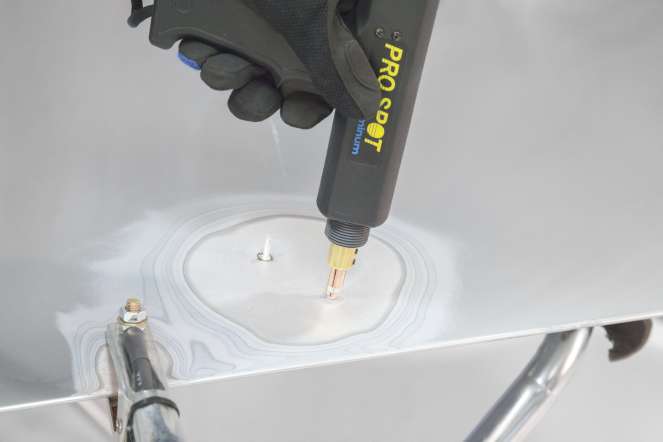
Because more aluminum panels are being used on vehicles to reduce weight, you are more likely than ever to have to remove a dent in an aluminum panel where you can't get access to the backside of the panel to push the dent out.
Aluminum dent removal equipment is available for pulling dents out of aluminum panels using weld-on studs similar to the way you pull dents on steel panels. But, do you know what's different about the aluminum "stud welders" compared to the steel "stud welders"?
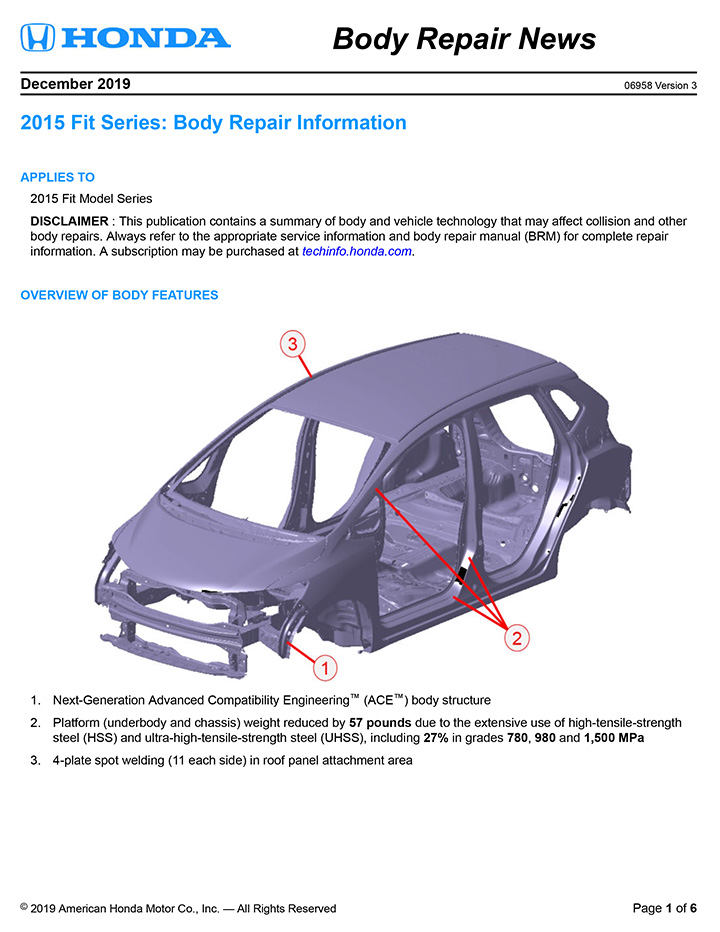
In April 2014, Honda released the Body Repair News bulletin: 2015 Fit Series: Body Repair Information.
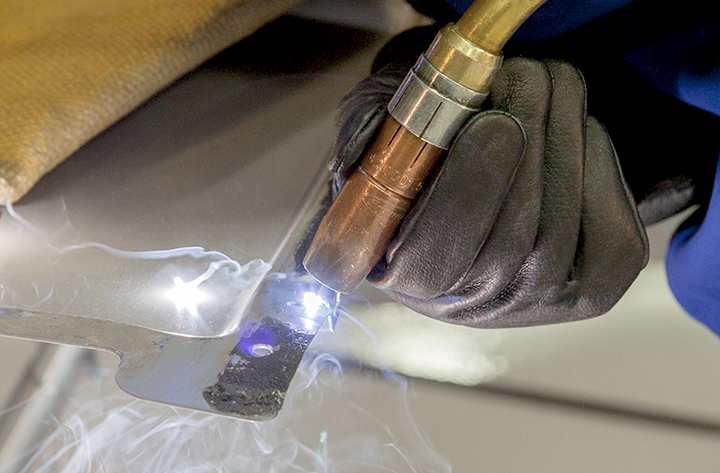
Did you know that the OEM collision repair procedures for aluminum intensive vehicles that include arc welding require GMA welders capable of welding in the pulse transfer mode? It's true. For this reason, the same pulse welders required by some vehicle makers are also required for the I-CAR welding events.
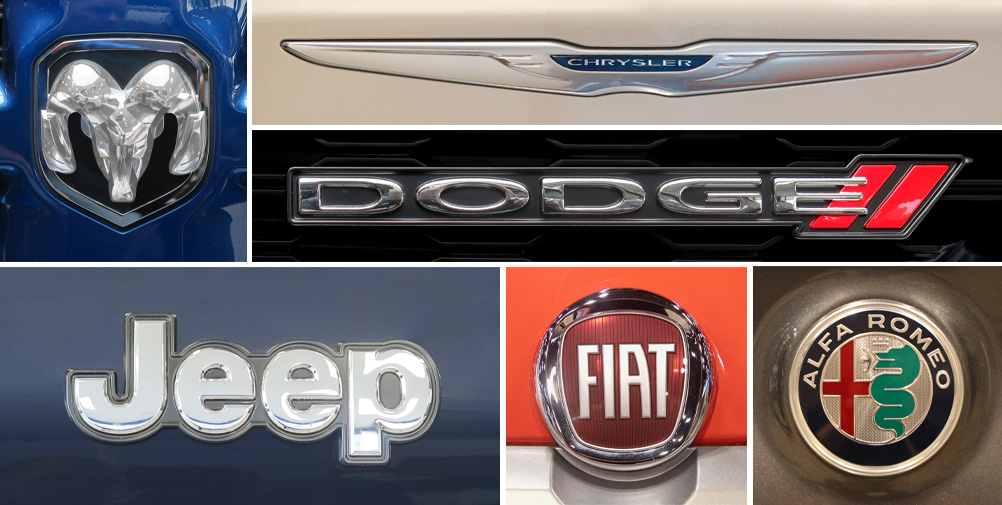
Did you know that in 2011, the Chrysler Group (FCA/Stellantis) published a position statement that identifies that parts should be installed in their entirety unless there is a procedure? This is applicable to all lines including Chrysler, Jeep, Dodge, Ram, Fiat, and SRT.
When it comes to repair information, vehicle makers use a wide variety of terminology for replacement parts. All of the different names can be confusing, especially when repairing a variety of vehicle makes and models.
Did you know that in 2013, General Motors published a position statement that identifies that sectioning should only be performed in recommended areas? This warning is applicable to all GM lines including Buick, Cadillac, Chevrolet, and GMC.
Vehicle makers each have their own way of organizing their repair information. The names of the materials and even the names of different parts of vehicles may vary.
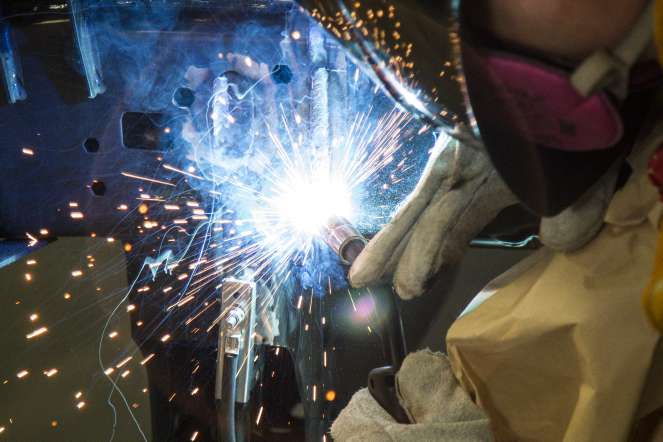
When determining repair vs. replace options for damaged cab-mounting areas, determine if the vehicle maker providesa service part and written replacement procedures. If there is no replacement procedure, but the service part is available, duplicate the original factory attachment method. If the part is not available as a separate service part, replacement of a major part of the frame, or the entire frame, may be the only option (See Figure 1).

Subaru has been growing in market share over the past few years. With more and more Subarus on the road everyday, what is the collision repair industry going to do about repairing these vehicles that are being seen with more regularity?
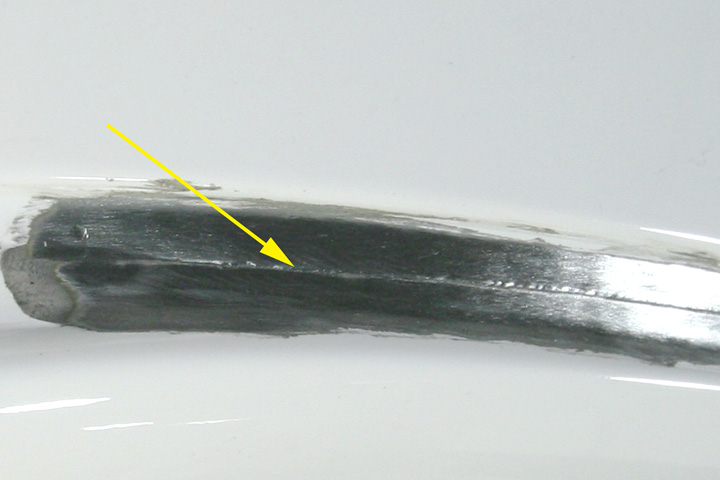
The roof panel on the 2013 Nissan 370Z is laser-welded along the roof-to-side panel mating flange from the factory. Through a routine technical inquiry from a collision repair facility, the I-CAR Repairability Technical Support team was asked if a Nissan procedure existed for replacing the roof panel.

As part of the I-CAR Repairability Technical Support (RTS) initiative's OEM linking pin activity, we are helping to connect the collision repair industry to the vehicle makers. Recently we had a technical inquiry that asked, "Do you have to replace a front passenger airbag on a Subaru even if only the driver's airbag deployed? The repair information seems to indicate that it should."
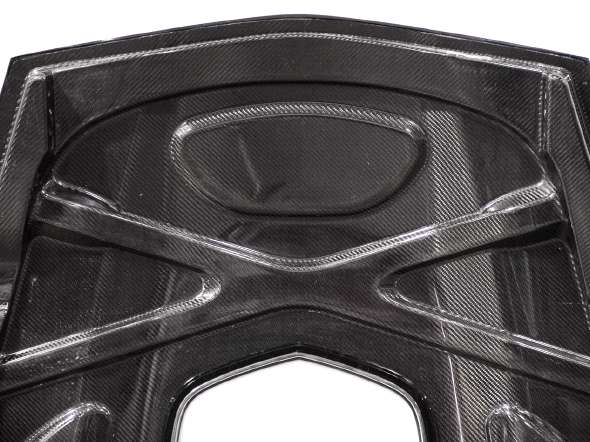
Carbon fiber is being used on many late-model vehicles and has become a buzzword in the industry. This article answers some questions you may have been wondering about on the use and repair of carbon fiber.
Beginning model year 2014, Mazda has introduced a regenerative engine braking system called i-ELOOP, short for "Intelligent Energy Loop." In this system, a capacitor is used to store electrical energy generated during deceleration. In a conventional system when the vehicle slows or stops, energy is wasted. The i-ELOOP system uses a unique variable voltage alternator that can produce up to 25 volts during deceleration. The electricity that is generated during deceleration is not sent directly to the vehicle's battery, because the battery cannot store more than 12 volts. Instead, the capacitor stores the electricity, up to the 25 volts produced by the alternator. The capacitor then readily discharges it through a voltage reduction circuit to power vehicle accessories.